Schwetzingen SWR Festival
Dialogues of Remembrance
Schwetzingen
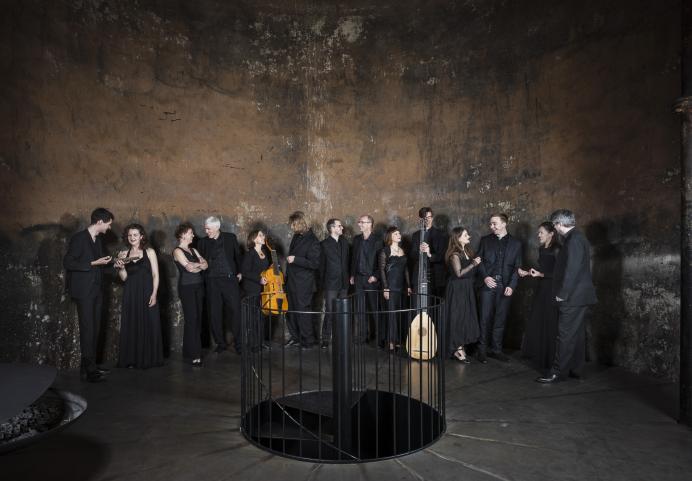
- Premiere — José María Sánchez Verdú: Purgatorio / Der Läuterungsberg, für Stimmen und Instrumente, 2021
Komposition:
- Luca Marenzio: Così nel mio parlar vol’esser aspro, (aus »Il nono libro de madrigali« für 5 Stimmen, Text: Dante Alighieri), 16. Jahrhundert
- Guillaume Dufay: Mon cuer me fait, Rondeau für 4 Stimmen, 15. Jahrhundert
- Johannes Ockeghem: Mort, tu as navré de ton dart, auf den Tod von G. Binchois, 15. Jahrhundert
- Josquin des Préz: Nymphes des bois, für fünf Stimmen
- Josquin des Préz: Douleur me bat, für 5 Stimmen
- Josquin des Préz: Mille regretz, für 4 Stimmen
- Jheronimus Vinders: O mors inevitabilis, für 7 Stimmen (auf den Tod von Josquin), 16. Jahrhundert
- Alban Berg: Für Louis Krasner Violinkonzert »Dem Andenken eines Engels«, Fassung für Solo-Violine und Kammerensemble (14 Instrumente), Bearbeitung von Andreas N. Tarkmann (*1956), 1935/ Bearbeitung durch Tarkmann
- SCHOLA HEIDELBERG | ensemble aisthesis
- Elisabeth Kufferath
Leitung: Walter Nußbaum
Veranstalter: SWR Schwetzinger Festspiele
With the conviction that we can only understand our present and determine our position if we are aware of our history, we are pleased to make a substantial contribution to a festival on the theme of "Remembering."
In this program of the Schwetzingen SWR Festival, eras are interwoven and epochs of upheaval are put into dialog: the modern age, which is breaking away from the Middle Ages, and the stage since modernity. The pieces thematize existential issues: love, death and memory, lamentation, accusation and hope.
The framework is set by the last works: Alban Berg's Violin Concerto (arranged for chamber ensemble) and a madrigal from the last collection published by Luca Marenzio. Today's compositions take up the calls from history: José M. Sánchez-Verdú refers to Dante, as does Marenzio. Remembering and commemorating are inscribed in the works from the 15th century: Josquin composed "Nymphes des bois" on the death of Ockeghem, Vinder his "O mors inevitabile" (O unavoidable death) as an obituary for Josquin. As in a time-lapse, memories sound out in Alban Berg's violin concerto: A Styrian folk song as a melancholic semblance of home, a Bach chorale as a broken longing for a home beyond, the Brucknerian rhythm of death as a startling memento, all carry an aura of remembrance into this modern work, as it may be felt at a perceived boundary of life.